
Japan Restarts and Then Shuts Kashiwazaki-Kariwa Nuclear Reactor: Safety, Energy, and Climate Impacts Explained
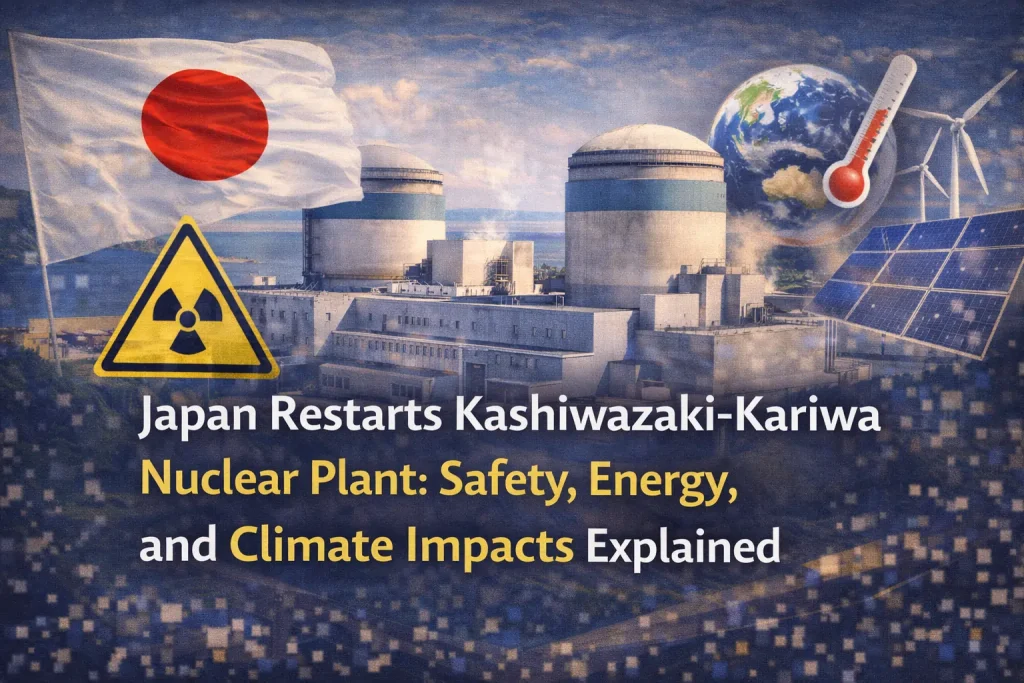
On January 21, 2026, Japan symbolically restarted Unit 6 at the Kashiwazaki-Kariwa nuclear power plant — the world’s largest nuclear complex, marking the first reactor activation by Tokyo Electric Power Company Holdings (TEPCO) since the 2011 Fukushima disaster.
However, the milestone was quickly overshadowed when TEPCO announced it would shut down the same reactor just one day later after a safety alarm was triggered during start-up procedures

The Ultimate Dubai Business Setup Guide for 2026!
- Japan Restarts & Then Shut Kashiwazaki-Kariwa Nuclear Plant: What You Need to Know
- Kashiwazaki-Kariwa Reactor: Capacity, Technology, and Safety Upgrades
- How Does Fukushima’s Legacy Influence Public Trust Today?
- Safety Measures and Regulatory Oversight at Japan’s Nuclear Plants
- Japan’s 2026 Energy Strategy: Role of Nuclear Power
- Environmental and Climate Benefits of Nuclear Energy in Japan
- Global and Regional Significance of Japan’s Nuclear Program
- What Happens Next?
Japan Restarts & Then Shuts Kashiwazaki-Kariwa Nuclear Plant: What You Need to Know
TEPCO successfully restarted Unit 6 on the evening of January 21, 2026, marking its first reactor reactivation in over a decade. The No. 6 reactor, part of a seven-unit complex capable of generating over 8.2 gigawatts of electricity had been dormant since the Fukushima shutdown.
The plant, capable of generating more than 8,200 megawatts, plays a crucial role in ensuring a stable electricity supply, reducing reliance on fossil fuel imports, and supporting the nation’s energy transition.
The restart faced a minor alarm shortly after activation, prompting a temporary shutdown for inspection, a sign of stringent safety measures now in place.
Kashiwazaki-Kariwa Reactor: Capacity, Technology, and Safety Upgrades
The Kashiwazaki-Kariwa facility has undergone extensive modernisation:
- Seismic Reinforcements: Designed to withstand major earthquakes.
- Advanced Cooling Systems: Ensuring redundancy in emergencies.
- Automated Monitoring: Real-time detection of anomalies.
- Efficiency Improvements: Enhanced reactor controls for reliable power generation.
With seven reactors and a total output surpassing 8,200 MW, it remains the backbone of Japan’s nuclear generation capacity. Experts note that its reactivation provides a critical baseload source to stabilise the grid alongside renewables like solar and wind.
How Does Fukushima’s Legacy Influence Public Trust Today?
The 2011 Fukushima disaster still weighs heavily on public perception. Evacuations, radiation concerns, and perceived mismanagement have left lasting impressions. Surveys indicate over 60% of Japanese citizens continue to express scepticism about nuclear safety.
Public sentiment directly affects nuclear policy and plant operations. Local communities are demanding transparency, safety guarantees, and emergency preparedness, which TEPCO and regulators must address continuously.
Safety Measures and Regulatory Oversight at Japan’s Nuclear Plants
Post-Fukushima reforms have strengthened Japan’s nuclear safety framework. Key initiatives include:
- Stress Testing: Simulations for earthquakes, tsunamis, and operational failures.
- Continuous Monitoring: Radiation and structural integrity tracking 24/7.
- Emergency Preparedness: Public drills and community alert systems.
- Regulatory Compliance: Oversight by the Nuclear Regulation Authority (NRA) to ensure adherence to strict safety standards.
TEPCO’s proactive communication about alarms, delays, and inspections demonstrates greater accountability, which is essential to restoring confidence.
Economic and Market Reactions
News of the shutdown had a measurable impact on financial markets: TEPCO’s shares fell about 3.5%, underperforming the broader Nikkei index, which rose on the same day. This reflects investor caution regarding the company’s operational risk profile and reputational challenges as a Fukushima operator.
Environmental and Climate Benefits of Nuclear Energy in Japan
Nuclear power provides low-carbon electricity, critical to achieving Japan’s climate goals. By reducing reliance on coal and LNG, the country mitigates greenhouse gas emissions while maintaining reliable baseload power.
Experts emphasise that nuclear energy enables Japan to integrate intermittent renewable sources such as solar and wind without compromising grid stability, a key factor in achieving net-zero emissions by 2050.
Global and Regional Significance of Japan’s Nuclear Program
Japan’s nuclear restart has regional and global ramifications:
- Energy Market Impact: May reduce fossil fuel imports in Asia, influencing prices and demand.
- Policy Influence: Other nations monitor Japan’s approach to nuclear safety, regulation, and public engagement.
- Future Expansion: TEPCO plans gradual restarts of additional reactors, with long-term exploration of next-generation reactor technology.
What Happens Next?
TEPCO plans to investigate the control rod malfunction thoroughly before considering another restart. There is no clear timeline for when Unit 6 might return to operation, and further delays could affect broader plans for Kashiwazaki-Kariwa and Japan’s nuclear agenda.
Public support, regulatory confidence, and technical reliability will be decisive factors shaping the future of nuclear energy in Japan.
Stay Ahead With The Leadership Circle
- Join The Leadership Circle Newsletter & receive our latest articles, updates, and publications directly in your inbox.