
Jamie Dimon Warns Trump’s 10% Credit Card Rate Cap Could Trigger Economic Turmoil
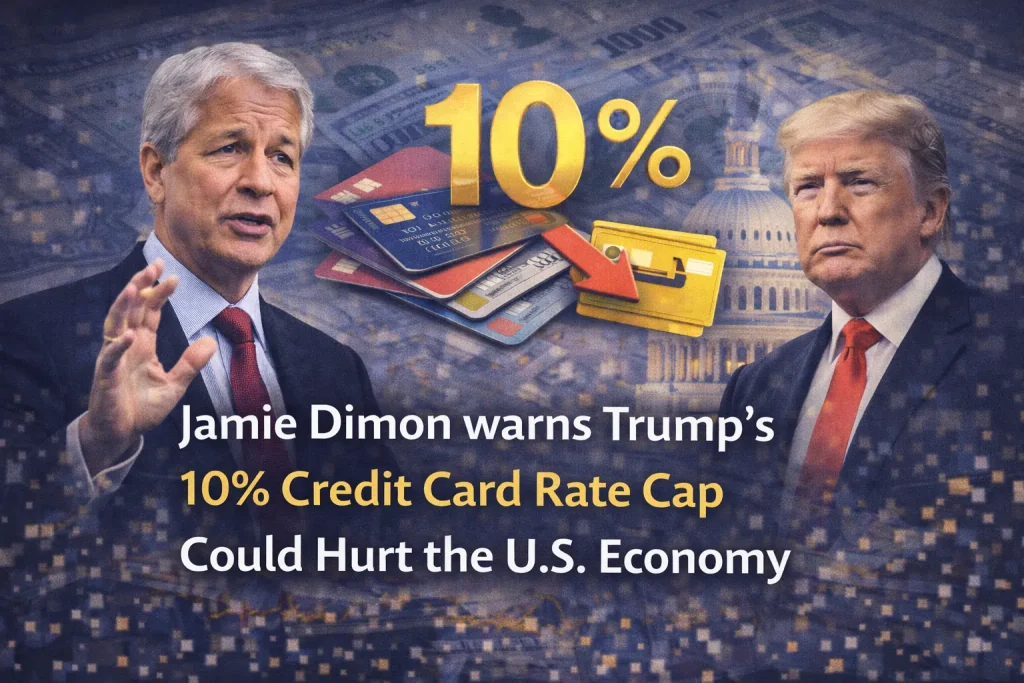
At the World Economic Forum in Davos, JPMorgan Chase CEO Jamie Dimon warned that former President Donald Trump’s proposal to cap credit card interest rates at 10% could be an “economic disaster,” potentially restricting access to credit for millions of Americans and disrupting consumer spending patterns.
Dimon said such a cap could force lenders to cut or limit credit products, hurting not just borrowers but also key sectors reliant on consumer liquidity.

The Ultimate Dubai Business Setup Guide for 2026!
- Trump’s Credit Card Rate Proposal Draws Market Attention
- What would the 10% Credit Card Interest Cap Would Change?
- Jamie Dimon Calls the Plan an “Economic Disaster”
- Why Credit Card Rates Are So High in the U.S.?
- The Risk to Consumer Credit Access
- Potential Impact on Spending, Businesses, and Growth
- How Banks and Industry Groups Are Responding?
- What This Debate Signals for U.S. Credit Markets
Trump’s Credit Card Rate Proposal Draws Market Attention
Former U.S. President Donald Trump’s proposal to cap credit card interest rates at 10% has drawn immediate attention from financial markets, policymakers, and banking executives. The proposal, positioned as a consumer-friendly measure to address persistently high borrowing costs, has reopened a long-running debate over government intervention in consumer credit markets.
With U.S. credit card interest rates near record highs and household debt continuing to rise, the proposal has become a focal point for broader discussions around affordability, access to credit, and financial stability.
What Would the 10% Credit Card Interest Cap Would Change?
Under the proposal, credit card annual percentage rates (APRs) would be capped at 10% nationwide, significantly below current market averages. As of recent data, the average U.S. credit card APR exceeds 22%, reflecting higher benchmark interest rates, borrower risk profiles, and compliance costs.
Supporters argue that a lower cap could reduce interest burdens for consumers carrying revolving balances. Critics counter that credit card lending is largely unsecured, and rigid pricing controls could fundamentally alter how lenders assess and extend credit.
Jamie Dimon Calls the Plan an “Economic Disaster”
Speaking at the World Economic Forum in Davos, JPMorgan Chase CEO Jamie Dimon issued a blunt warning about the proposal’s potential consequences.
“It would be an economic disaster,” Dimon said, cautioning that a strict rate cap could force lenders to sharply reduce credit card offerings.
Dimon emphasised that the broader economy, not banks, would bear the brunt of the impact:
“It would remove credit from about 80% of Americans. That’s their backup credit.”
His remarks highlight concerns that limiting pricing flexibility could significantly reduce access to consumer credit, particularly during periods of economic stress.
Why Credit Card Rates Are So High in the U.S.?
Credit card interest rates are driven by multiple structural factors, including:
- Higher default risk associated with unsecured lending
- Fraud losses and chargeback exposure
- Funding costs and regulatory capital requirements
- Operational and compliance expenses
Unlike secured loans such as mortgages or auto financing, credit cards carry no collateral, making risk-based pricing a core feature of the market. Analysts note that while rates appear elevated, they reflect the underlying economics of short-term, unsecured credit.
Also Check: Goldman Sachs Exits Apple Card as JPMorgan Chase Takes Over
The Risk to Consumer Credit Access
Banking industry analysis suggests that a 10% interest rate cap could make large portions of the credit card market unprofitable. In response, lenders may tighten underwriting standards, reduce credit limits, or close accounts altogether.
Estimates indicate that more than 150 million Americans could face reduced access to credit under such a cap. This includes middle-income households that rely on credit cards for emergency expenses, cash-flow management, and short-term liquidity.
Potential Impact on Spending, Businesses, and Growth
Consumer spending accounts for nearly two-thirds of U.S. economic output, and credit cards play a central role in facilitating that activity. Reduced access to revolving credit could weigh on:
- Retail and e-commerce spending
- Travel and hospitality sectors
- Small and medium-sized businesses
- Service-based industries and local economies
Dimon warned that the consequences would extend beyond financial institutions, affecting merchants and employers that depend on consistent consumer demand.
How Banks and Industry Groups Are Responding ?
Major banking associations and financial industry groups have strongly opposed the proposal. They argue that broad rate caps oversimplify the complexities of consumer lending and could push borrowers toward higher-cost or less regulated credit alternatives.
Some industry leaders have suggested targeted reforms, such as improved disclosure standards or borrower-specific protections rather than blanket pricing restrictions.
What This Debate Signals for U.S. Credit Markets ?
The debate surrounding Trump’s 10% credit card rate cap underscores a broader policy challenge: balancing consumer protection with the need to maintain stable and accessible credit markets.
While concerns over high credit card interest rates continue to grow, financial leaders warn that abrupt pricing interventions could shrink credit availability and slow economic growth. As discussions move forward, data-driven analysis and measured policy design are likely to shape the future of U.S. consumer credit.
Stay Ahead With The Leadership Circle
- Join The Leadership Circle Newsletter & receive our latest articles, updates, and publications directly in your inbox.