Foreign Ownership Restrictions and Conditional Sectors in Vietnam: What Investors Need to Know in 2026
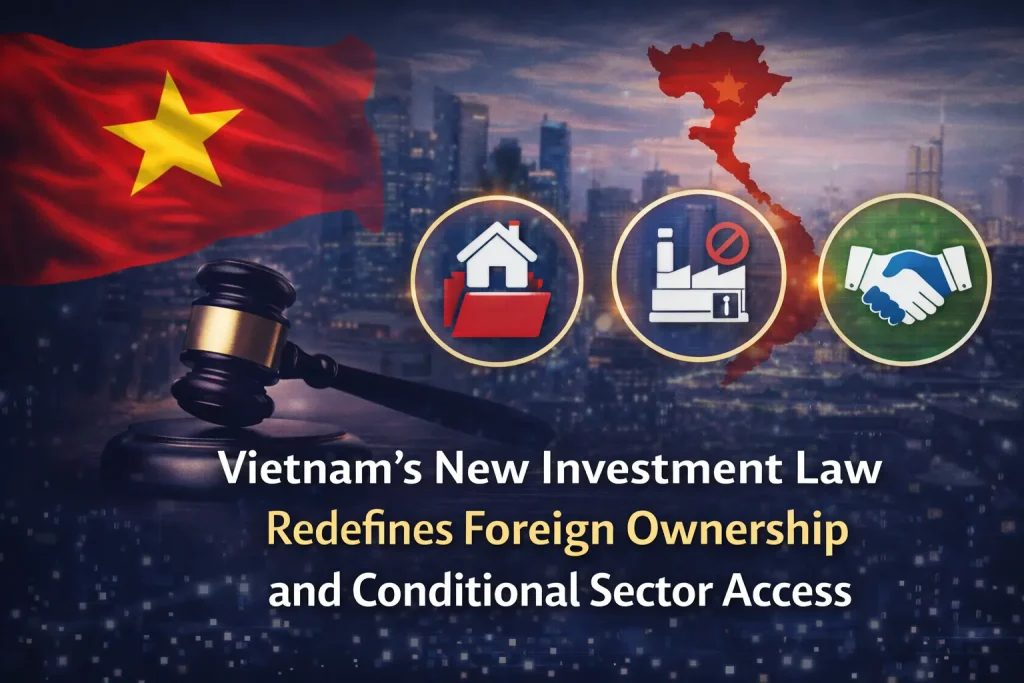
Vietnam continues to attract strong foreign investment, but entering the market is not as simple as registering a company and starting operations. While many sectors are open to foreign capital, others remain restricted or conditional, requiring investors to meet specific legal and regulatory requirements.
As Vietnam implements updates under its amended Investment Law, understanding foreign ownership restrictions and conditional business sectors has become essential for companies planning expansion in 2026.

The Ultimate Dubai Business Setup Guide for 2026!
- Overview of Foreign Ownership Rules in Vietnam
- How Vietnam Regulates Market Access for Foreign Investors?
- What Are Conditional Business Sectors in Vietnam?
- Key Foreign Ownership Restrictions by Sector
- Recent Legal Updates Affecting Foreign Investors
- What This Means for Investors Planning Entry in 2026?
Overview of Foreign Ownership Rules in Vietnam
Vietnam allows foreign investment in most industries but places limits on sectors considered sensitive to national interests or public welfare. These limits determine:
- Whether foreign investors may hold 100% ownership?
- When are local partners required?
- Which approvals or licenses must be obtained?
Foreign ownership restrictions apply regardless of company size and affect both new market entrants and existing investors expanding their activities.
Also Check: UAE Visa Changes in 2026: New Categories, Sponsorship & Entry Rules
How does Vietnam Regulate Market Access for foreign investors?
Vietnam applies a negative list approach to foreign investment. Under this system:
- All sectors are open unless listed as restricted or prohibited
- Prohibited sectors are closed entirely to foreign investors
- Conditional sectors allow foreign investment, subject to specific requirements
These rules are governed by the Law on Investment, sector-specific legislation, and Vietnam’s commitments under international trade agreements such as the European Union–Vietnam Free Trade Agreement.
What Are Conditional Business Sectors in Vietnam?
Conditional business sectors are industries where foreign investors must meet defined criteria before entering the market. These conditions vary by sector and may include:
- Maximum foreign ownership percentages
- Licensing or approval from the relevant ministries
- Capital, experience, or technical requirements
- Ongoing compliance and reporting obligations
Conditional sectors remain open to foreign investment but are subject to closer regulatory oversight.
Key Foreign Ownership Restrictions by Sector in Vietnam
Foreign ownership limits are most commonly applied in the following industries:
| Sector | Common Foreign Ownership Conditions |
|---|---|
| Banking and Financial Services | Ownership caps and regulatory approval |
| Telecommunications | Limits on foreign equity, especially in network services |
| Media and Broadcasting | Restrictions on foreign control |
| Education and Training | Licensing and operational conditions |
| Logistics and Transport | Ownership limits depending on service category |
| Energy and Natural Resources | Project-specific approvals and state oversight |
Ownership conditions often depend on how a business activity is classified and whether Vietnam has made international commitments covering that sector.
Also Check: Big Tech Avoids Strict EU Digital Regulations
Recent Legal Updates Affecting Foreign Investors
Vietnam has introduced amendments to its investment framework to reduce administrative burdens and clarify market access rules. Several conditional business lines have been removed or simplified, while others now rely more on post-licensing supervision.
Despite these reforms, foreign ownership caps remain in place for regulated sectors such as finance, telecommunications, and media. The changes focus on transparency and efficiency rather than removing restrictions altogether.
What Does This Mean For Investors Planning Entry in 2026?
Foreign investors planning to enter Vietnam in 2026 should conduct a detailed market access review before committing capital. Key steps include:
- Identifying whether the target activity is unrestricted, conditional, or prohibited
- Confirming applicable foreign ownership limits
- Reviewing licensing and approval requirements early in the planning process
Vietnam offers strong long-term investment potential, but compliance with foreign ownership rules remains a critical factor in successful market entry.
Stay Ahead With The Leadership Circle
- Join The Leadership Circle Newsletter & receive our latest articles, updates, and publications directly in your inbox.